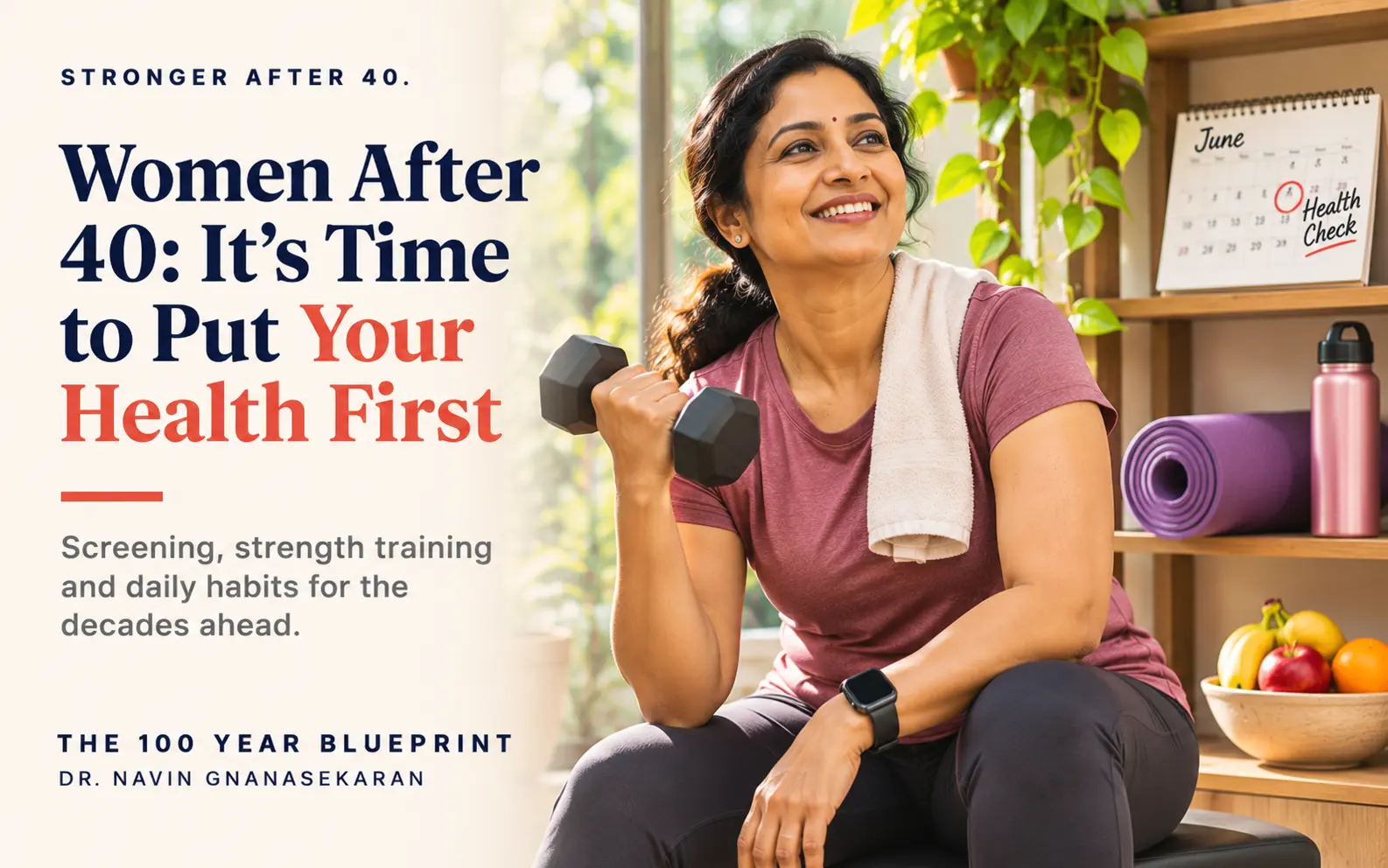
Turning 40 is a busy stage of life for many women. Careers are in full swing, family responsibilities are complex, and the invisible load of emotional caregiving is at its peak. Health often takes a back seat.
In this article for Health and Me, Dr. Navin Gnanasekaran argues that the years between 40 and 50 are a critical window. It is the time to take a proactive, personalised approach that protects physical independence and mental sharpness for decades to come.
Perimenopause changes more than periods
Perimenopause is a major biological shift. Before menopause, estrogen protects women in many ways: it keeps blood vessels flexible, supports glucose metabolism, reduces inflammation and helps preserve bone density.
As estrogen falls, that protection fades. Heart disease risk rises quickly, bone loss speeds up and the risk of osteoporosis increases. Muscle loss also accelerates, which is why many women notice a drop in lower-body strength in their late 40s. That is biology, not laziness.
A targeted health dashboard
Preventive care should be focused, not a random list of tests. Dr. Gnanasekaran suggests women in their 40s discuss these with their doctor:
- Fasting insulin to catch insulin resistance years before diabetes
- ApoB and hs-CRP to assess plaque-causing cholesterol and chronic inflammation
- A full thyroid panel (TSH, Free T3, Free T4), since thyroid problems are far more common in women
- A DEXA scan to set a bone density baseline while early bone loss can still be reversed
- Cancer screening: mammograms from 40 (with ultrasound for dense breast tissue) and Pap smear with HPV testing every 3–5 years
Everyday habits that last
You cannot out-supplement a sedentary lifestyle. Walking is good for the heart, but it does little for muscle or bone. Strength training twice a week builds bone, preserves muscle and helps regulate blood sugar.
Most Indian diets are low in protein, so aim for good-quality protein at every main meal. Eating vegetables first, protein second and carbohydrates last can also reduce blood sugar spikes after meals.
Protect deep sleep with a “digital sunset” before bed and by finishing dinner a few hours before sleeping.
Mental well-being deserves equal attention
Chronic stress from the invisible load raises cortisol, which drives belly fat, poor sleep and inflammation. Small pockets of calm, such as a few minutes of box breathing or a short walk without the phone, can change how the body responds to stress.
Loneliness is another hidden risk. Keeping a “third place” outside home and work, like a library or a badminton court, and making time for friends away from screens helps protect long-term health.
The birthday protocol
To keep health from slipping off the calendar, Dr. Gnanasekaran suggests booking a full health check during your birthday month every year. Instead of only asking whether results are normal, ask your doctor three questions: What are my top health risks? What should I change in the next 12 months? What should we monitor next year?
Good health after 40 is not about a perfect overnight overhaul. Start with one or two changes this month and build on them. The goal is to preserve strength, independence and the freedom to live the years ahead well.
Originally published in Health and Me. Read the original article →