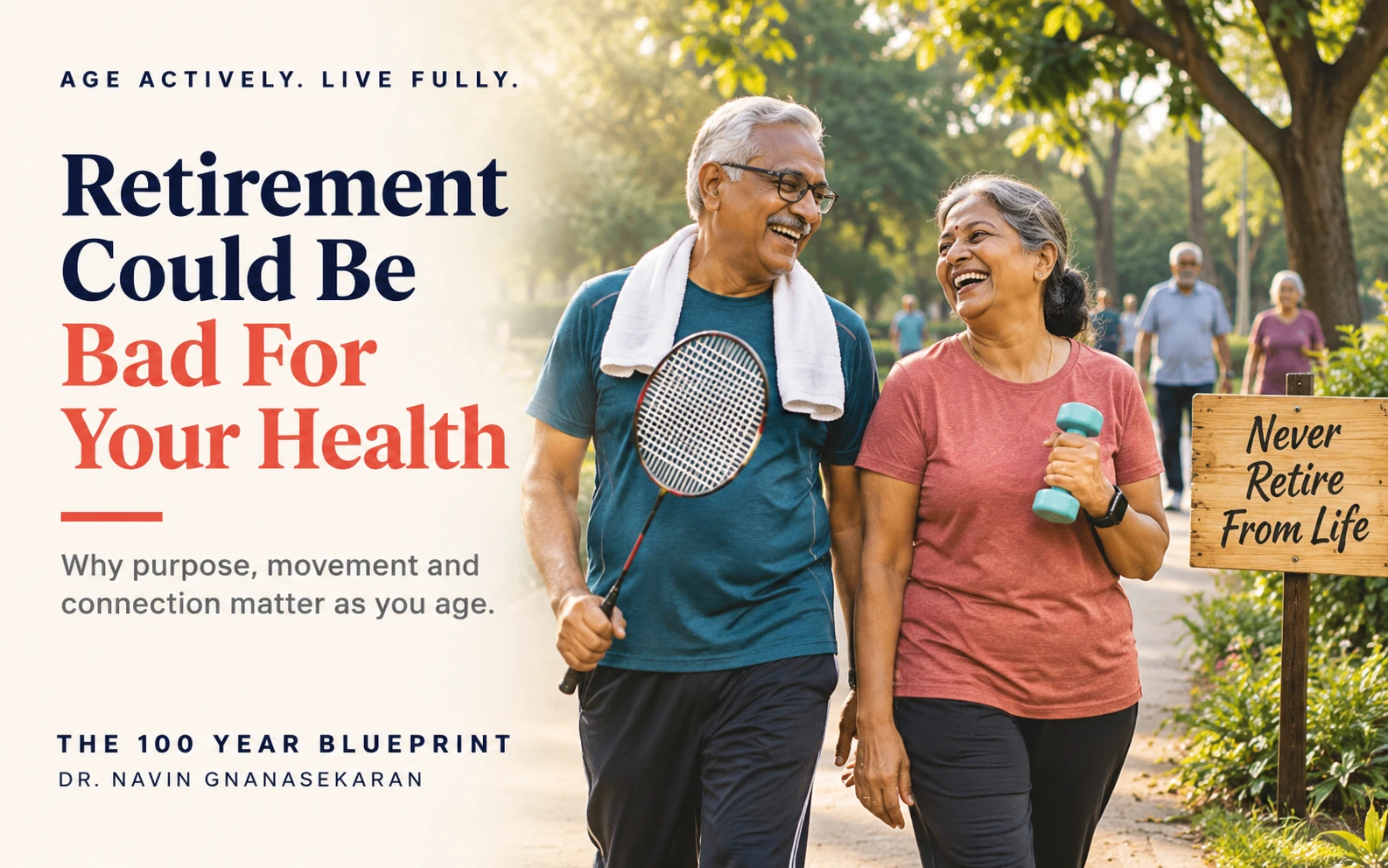
Retirement is usually seen as the reward for decades of hard work. But on NDTV's new podcast series Health, Actually, Dr. Navin Gnanasekaran, author of The 100 Year Blueprint, cautions that stepping away from work should never mean stepping away from an active life.
As life expectancy rises, the bigger challenge is making sure those extra years are spent fit, mentally sharp and independent.
Lifespan versus healthspan
Modern medicine, vaccines and antibiotics have helped people live longer. But Dr. Gnanasekaran points out that more years do not automatically mean more healthy years. The goal should be to close the gap between how long we live and how long we stay well.
When the routine disappears
Retirement often brings a sudden change. The workplace, daily conversations and mentally challenging tasks fall away, and many people end up spending long hours in front of the television or their phones.
According to Dr. Gnanasekaran, this loss of purpose and activity can quietly speed up the decline in health and independence. As he puts it, “Retirement is only when we let our bodies retire.”
Finding a new purpose
Staying productive does not have to mean a nine-to-five job. Starting a small business in your 60s, volunteering, helping at a temple, joining community activities or reviving a forgotten hobby can all give people a reason to get out of bed every morning.
Loneliness is a silent risk
Loneliness is a growing concern among older adults. Dr. Gnanasekaran refers to research suggesting that about one in four urban Indians experience significant loneliness, and to studies that compare its health effects to those of smoking.
Walking groups, sports, apartment community activities, photography or chess are simple ways to stay socially connected.
Ageing is inevitable, degeneration is not
A central idea of The 100 Year Blueprint is that getting older and falling apart are not the same thing. Building muscle, moving more, sleeping well, managing stress and keeping friendships are the pillars of healthy ageing.
Dr. Gnanasekaran especially stresses strength training, since muscle naturally declines with age. Walking is good, but it is not a complete exercise routine; resistance training and enough protein are essential to stay strong and independent.
A new beginning, not an end
As India prepares for an ageing population, 60 can be seen as a chance to explore new interests and stay connected to the community. The message is simple: plan not just for financial retirement, but for an active, mentally stimulating and socially connected life after it.
Originally published in NDTV. Read the original article →