Living longer does not necessarily require expensive supplements, futuristic treatments or the latest biohacking trend. According to Dr. Navin Gnanasekaran, longevity begins with simple daily habits that demand consistency.
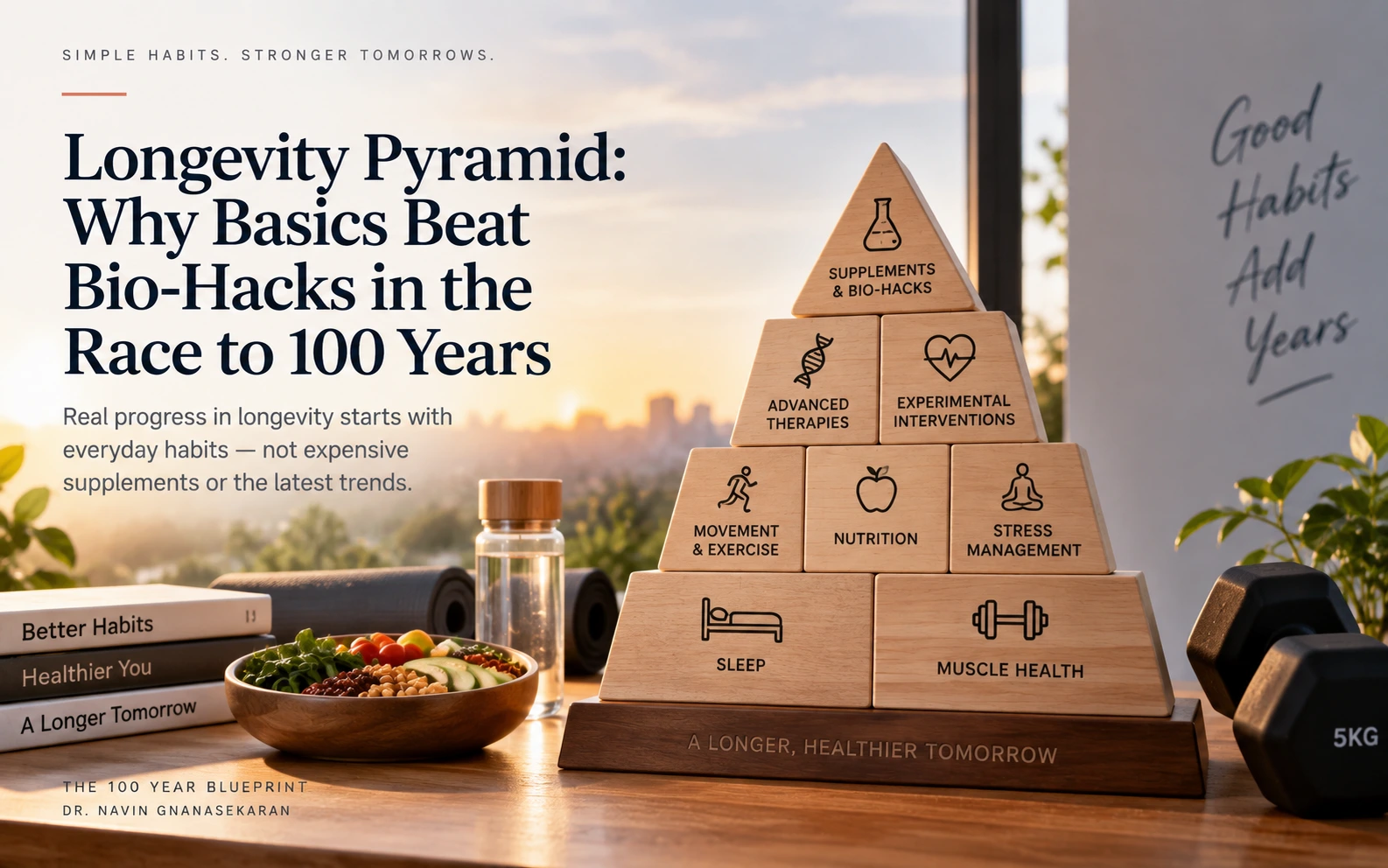
His concept of the "longevity pyramid" places the fundamentals of healthy living at the broad base. Sleep, stress management, balanced nutrition, regular movement and muscle building should come before more experimental interventions.
The foundation comes first
Many people focus on advanced anti-ageing interventions while overlooking the habits that have a much stronger influence on long-term health and health span.
Supplements and biohacking approaches may have a place, but they should not be treated as substitutes for an unhealthy lifestyle. The foundation has to be established before considering more advanced strategies.
Beyond bio-hacks
Dr. Gnanasekaran cautions against blindly following social media-driven longevity trends. Approaches such as red-light treatments, ice baths and saunas may have specific applications, but they belong closer to the top of the longevity pyramid rather than its foundation.
Experimental anti-ageing interventions may appear promising in early research, but evidence from animal studies does not automatically establish the same benefits in humans.
Movement and muscle
Everyday movement is one of the key elements of his longevity framework. Walking regularly, including short walks after meals, can form part of an active lifestyle.
However, walking alone is not enough. Resistance training is also important for preserving muscle mass and physical capability as people age.
Nutrition matters
Adequate protein intake is another important part of the framework, particularly in the context of Indian diets. A balanced eating pattern can include vegetables, protein sources and carbohydrates in a considered sequence.
The approach also emphasises limiting refined sugar and paying attention to overall metabolic health rather than looking for a single food or supplement to solve every health problem.
Sleep remains a cornerstone
Sleep is another fundamental layer of the longevity pyramid. Maintaining a consistent bedtime and aiming for sufficient sleep according to age are important parts of long-term health.
Protecting long-term health
The framework also includes avoiding smoking and excessive alcohol, staying hydrated, getting appropriate sunlight, maintaining mobility and taking care of oral hygiene.
Environmental health also matters. Reducing unnecessary exposure to harmful chemicals and improving indoor air quality can contribute to a healthier living environment.
Mental and emotional wellbeing
Longevity is not limited to physical health. Managing chronic stress, maintaining meaningful relationships, continuing to learn and pursuing enjoyable activities are also important elements of a healthy life.
Finding activities that create deep engagement or a sense of "flow" can support mental wellbeing. Physical activities that combine movement, social interaction and mental stimulation can be particularly valuable.
Prevention and consistency
Preventive health check-ups also form part of the longevity framework. Age-appropriate screening can help identify health problems earlier, before they become more serious.
Above all, consistency remains central to the approach. Longevity is not built through short bursts of intense effort or by constantly switching between wellness trends. It is built through sustainable habits repeated over many years.
The most effective longevity strategies are often the simplest ones. Building a strong foundation through sleep, movement, nutrition, stress management and preventive care can be more valuable than chasing every new biohacking trend.