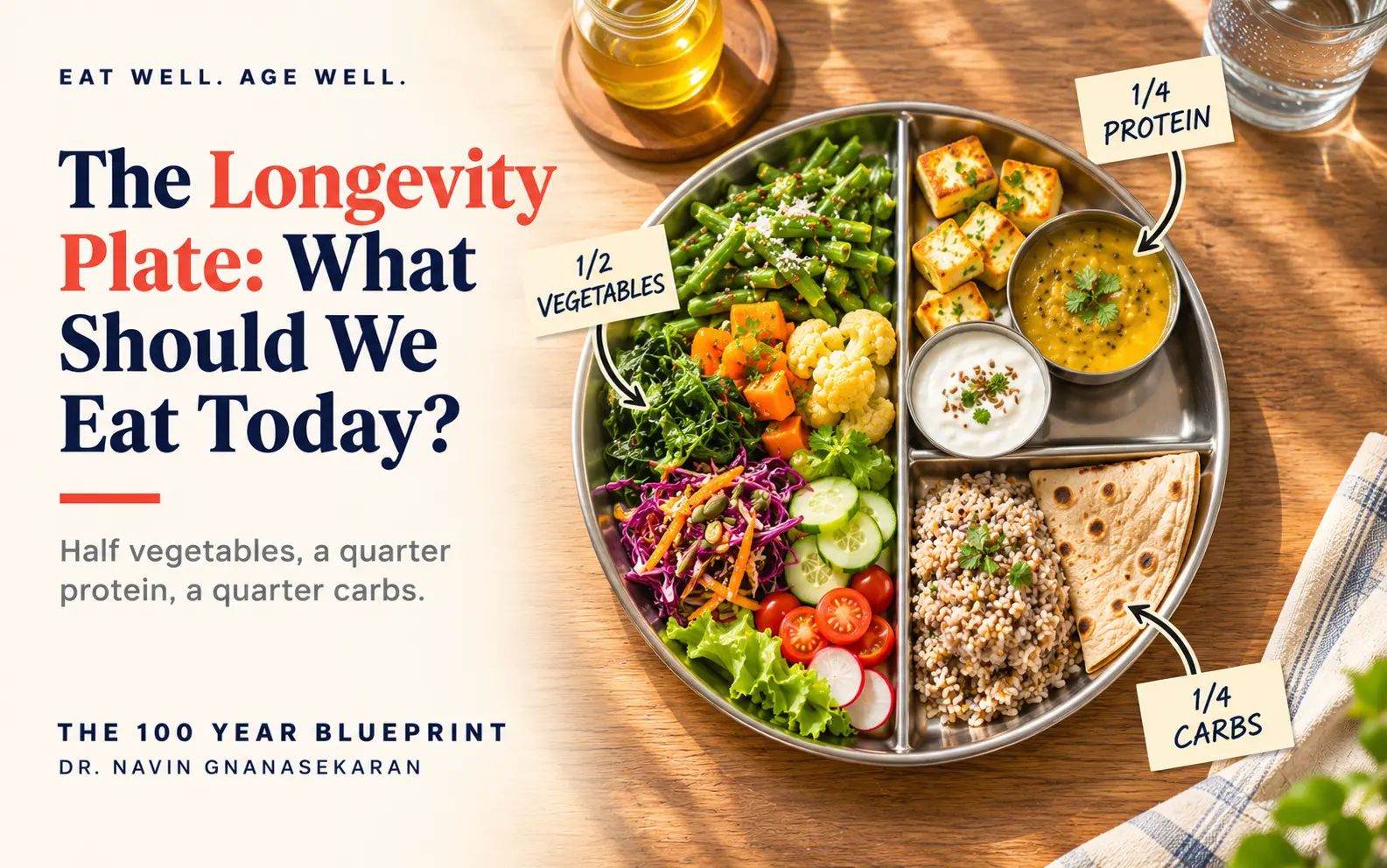
We often think about longevity as a number: 80, 90 or even 100. In this article for Health and Me, Dr. Navin Gnanasekaran says the more meaningful question is how well we live during those years, and nutrition plays a big part in the answer.
A longevity diet does not need to be exotic, expensive or built around supplements. Much of what supports healthy ageing is already in Indian kitchens. The secret is less about a single superfood and more about the pattern on our plate.
Think beyond calories
A healthy diet provides enough protein, fibre, vitamins, minerals and healthy fats while limiting excess salt, sugar and unhealthy fats. In practice, that means making minimally processed foods the base of everyday meals.
The ½–¼–¼ plate
Imagine your plate as a pie chart: half for vegetables, a quarter for protein and a quarter for carbohydrates.
Indian meals are usually fresh and unprocessed, which is good, but they are often unbalanced. A pile of rotis with thin dal or a mountain of rice with rasam leaves little room for protein and vegetables. Dr. Gnanasekaran's rule of thumb: half the plate salad, sabzi or poriyal, and no more than a cup of rice or two rotis.
Don't forget protein
Preserving muscle is one of the least appreciated parts of healthy ageing, and muscle needs protein. National surveys show that India is chronically protein-deficient.
Vegetarians can rely on dal, rajma, chana, soy, peas, milk, curd, paneer, nuts and seeds. Non-vegetarians can add eggs, fish, poultry and lean meat. Protein works best alongside regular strength training.
Portion your carbs and choose the grain
Carbohydrates are not the enemy when eaten in the right amount and in less processed forms. Swapping refined grains for whole grains, millets, pulses and vegetables adds fibre and reduces sugar spikes, which matters in states where diabetes and prediabetes are very common.
A bowl of rice with paneer, salad and thick curd is nutritionally very different from a meal built only on refined carbohydrates.
Fat: quality matters
Fat is essential, but type and amount matter. Dr. Gnanasekaran suggests no more than about three spoons of oil a day, preferring filtered groundnut or mustard oil. Biscuits, fried snacks, refined seed oils and vanaspati are best avoided. Even ghee does not need to be a hero or a villain; overall pattern and portion matter more.
The quiet problem of salt, sugar and processed food
Sugary drinks, packaged snacks, bakery items and salty foods add up quietly. Following WHO guidance, keep free sugars low and salt under 5 grams a day. That does not mean giving up festival sweets; it means making the healthier choice most of the time.
Consistency is the key ingredient
No single food can make up for a poor diet, and one celebration meal does not undo years of healthy eating. Eat closer to nature, add variety, protect muscle, choose quality over processing and keep portions sensible. The goal is not just to add years to life, but strength, independence and vitality to those years.
Originally published in Health and Me. Read the original article →